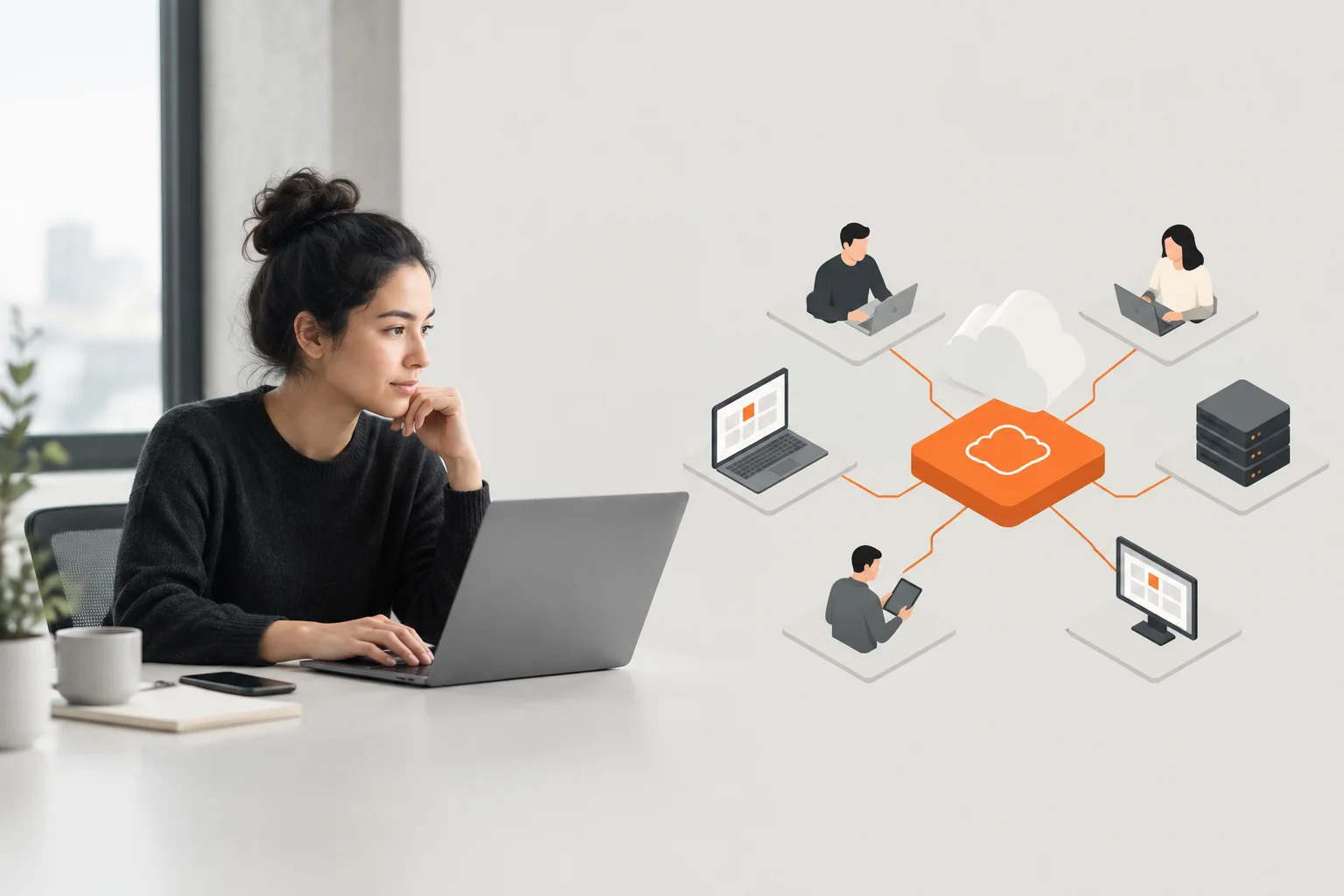
SaaS Is Dying. So Is Being Held Hostage by Your Vendor.
Why code is no longer what you pay for, which layer of an AI application to own and which to rent, and 5 questions to ask before your next software renewal.
- Read article
Custom design and a CMS your team can run.
Product judgment first, then agent-speed building.
Agents that do real work inside your operations.
We transform your SDLC for the new agentic era.
We build UI/UX component systems for faster agent outcomes.
All services: Design · Build · Automate · Support
What We Do overviewFive steps from idea to a product that keeps improving.
Spec & quote projects, an agile retainer or team augmentation.
The playbook, CMS and project tools we built and use every day.
AI that does real work, safely, inside your environment.
Own the software your business runs on.
A technical partner for your website and campaigns.
Decide what’s worth building, then launch it fast.
Stabilize now, then rebuild without going offline.
A boutique digital agency in Cedar Grove, NJ, since 2001.
What we believe and how it shapes the way we work.
Meet the designers, developers and strategists.
What our clients say about working with us.
Ideas on software, AI and agents from our team.
A combination of inbound and outbound marketing may be just what your business needs to stand out in a competitive market place.
The last few years have seen a significant shift away from traditional 'push' marketing efforts and toward alternative 'pull' tactics. As we have discussed in this space, the democratization of the internet, along with budget constraint and increasing audience cynicism toward banner ads and pop ups, have turned inbound marketing from an intriguing alternative to the best possible philosophy for quality digital marketing.
But marketing is never singular. While inbound tactics have unquestionably become more successful than their outbound counterparts, a combination of both may be just what your business needs to stand out in a competitive market place. Here are 4 ways in which inbound and outbound marketing can work together to maximize your success.
A core part of inbound marketing is publishing relevant, high-quality content on your website that drives traffic from interested members of your target audience. SEO-optimized content helps you attract some users, but what if that is not enough? Too often, we see business put out great content that remains ineffective simply because of a lack of exposure.
To help that exposure along, consider engaging in targeted promotions to your target audience that highlight your content. Promoted posts on Facebook or Twitter can drive significant traffic to your content, while also increasing your exposure on these social networks. If the content to which you are linking is gated behind a sign-up form, a social media promotion can even play a direct part in your lead generating efforts.
Speaking of which: both Facebook and Twitter have taken steps to help businesses increase the amount of contacts in their database. Twitter's lead generation card enables marketers to create ads that help users sign up for your email newsletter with a simple click on a subscribe button. Twitter then captures the user's information from their profile page, and sends it to the marketer as a lead.
Similarly, Facebook has begun to offer lead ads that allow marketers to capture their audience's information right on the network. The benefits of both are simple: by helping interested users sign up to become a lead on the network on which they see your ad, they save a step and increase conversion rates. The lead still ends up in your database for nurturing efforts.
Another way in which inbound and outbound marketing can work together seamlessly occurs after you have attracted visitors to your site. Hopefully, your SEO-focused content (perhaps with some promotion behind it) has attracted a healthy number of visitors to your website. How do you ensure that after reading the piece of content relevant to them, they will come back?
The answer is remarketing. By placing a few lines of codes within your website, you can specifically target past web visitors to entice them to come back for more. Major digital advertising platforms like Google, Facebook, and Twitter all offer remarketing opportunities, enabling you to set up ads specifically aimed at staying in the minds of your past visitors.
Lead nurturing is a crucial part of inbound marketing, and some outbound tactics can help you make your existing email efforts even more successful. For example, Facebook, Twitter, and Google both enable marketers to target ads to custom audiences, based on a list you provide to them.
Especially if you have a healthy list of leads, this tool can be immensely valuable. Ads targeted only to these leads help you put out specific messages about content that may be relevant to them or other nurturing efforts.
And even if you only have a few leads in your system, you can take advantage of this outbound method: thanks to Facebook's lookalike audience, you can target ads to both your leads and users that exhibit similar characteristics. Now, your outbound ads work both as a lead generation and a lead nurturing tool.
The fact that inbound marketing has become the most effective marketing philosophy in today's digital age does not mean you should ignore traditional outbound methods. In fact, used correctly, the two concepts can work together beautifully.
Straight talk on custom software, agentic AI and the web — from the people who build it.
Why code is no longer what you pay for, which layer of an AI application to own and which to rent, and 5 questions to ask before your next software renewal.

Every SaaS vendor now has an “AI agent” on the price list. For a mid-size company, renting that agent means renting the one thing that should be yours: the logic of how your business actually runs.

Custom AI harness development is the real work behind enterprise AI agents. Learn what a harness includes, where the effort goes, and what to ask vendors.